VIP Rewards Reshaping Deposit Patterns in Mobile Poker Across Age and Region Groups
Wendy Long · Sep 18, 2026
VIP Rewards Reshaping Deposit Patterns in Mobile Poker Across Age and Region Groups
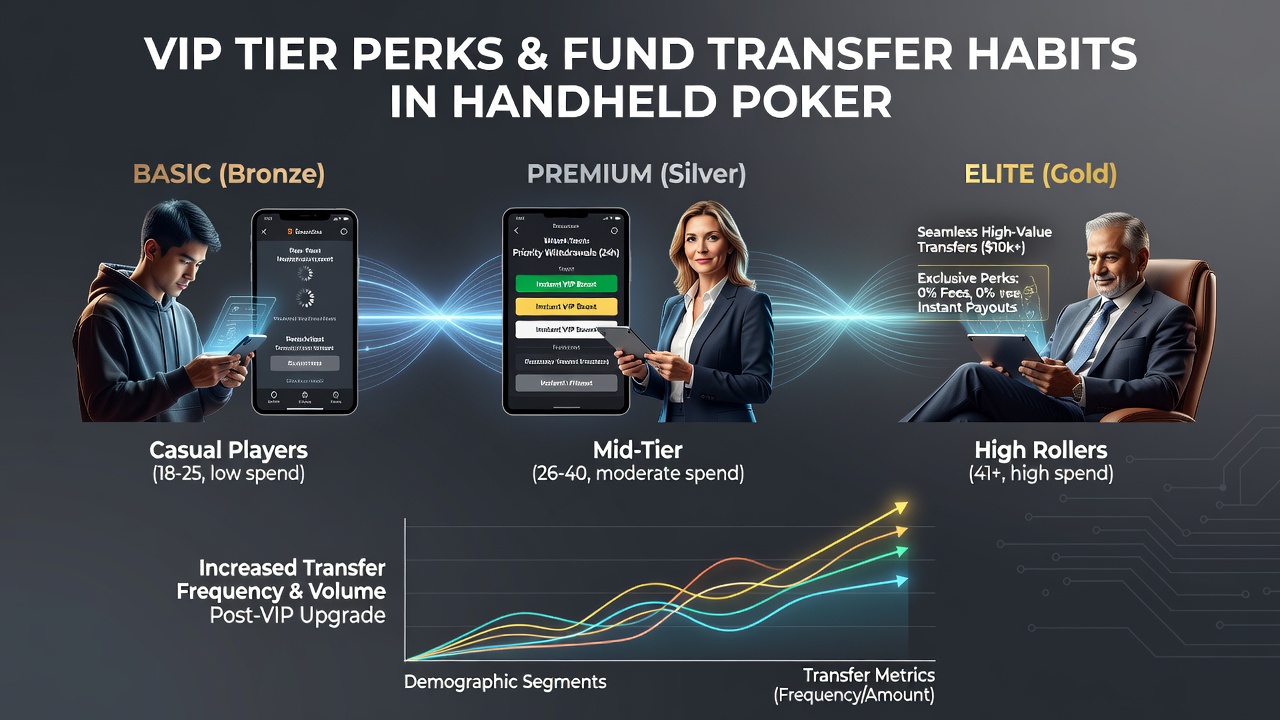
Data from industry reports indicate that VIP tier structures in handheld poker applications have begun altering how players move funds between accounts and games, with patterns varying sharply by age bracket and geographic location. Observers note that higher tiers often unlock reduced transaction fees, instant withdrawal approvals, and bonus credits tied directly to deposit volume, which in turn encourages more frequent smaller transfers among certain groups while prompting larger, less frequent movements in others.
Perk Structures and Their Direct Effects on Transfer Timing
Researchers have tracked how cashback percentages, priority processing, and exclusive reload bonuses at elevated VIP levels correlate with shifts in deposit schedules. Younger players aged 21 to 34 tend to respond to instant-match incentives by spreading transfers across multiple sessions per week, whereas those over 45 consolidate activity into fewer but larger deposits to maximize tier progression thresholds. These behaviors appear in aggregated platform data released during September 2026 updates from multiple operators.
Studies from academic institutions reveal that loyalty point multipliers attached to VIP status also influence withdrawal habits, with mid-tier users delaying cash-outs until they reach higher brackets to preserve accumulated benefits. This pattern holds across North American and European markets, though Australian segments show stronger preference for scheduled weekly transfers that align with bonus reset cycles.
Demographic Variations in Funding Responses
Segmentation analyses break down responses by income level and playing frequency. Higher-income cohorts leverage VIP perks for seamless cross-border transfers when regulatory environments permit, while lower-income groups concentrate activity around promotional windows to stretch deposit value. Geographic differences emerge clearly: players in regulated U.S. states favor ACH-linked VIP accounts for fee reductions, whereas participants in Asian markets lean toward e-wallet integrations that sync with tier-based speed bonuses.
One longitudinal review conducted by university researchers found that female players across all age groups exhibit steadier transfer volumes once VIP status unlocks personalized deposit limits, in contrast to male counterparts who accelerate activity following milestone rewards. These findings align with transaction logs examined through September 2026 reporting periods.
Platform Integration and Regional Regulatory Influences
Handheld poker environments increasingly embed VIP dashboards directly into banking menus, allowing real-time visibility into perk eligibility before each transfer. This design choice, documented in operator filings, reduces friction for frequent small deposits among mobile-first demographics while supporting bulk funding for users who prioritize tier maintenance. Data shows integration with regional payment rails such as those overseen by the Nevada Gaming Control Board and equivalent bodies in Canada has accelerated adoption rates in those jurisdictions.

Industry associations including the American Gaming Association have published summaries indicating that VIP-driven transfer changes remain most pronounced in markets with mature mobile licensing frameworks. European operators report similar outcomes under varying national rules, with tier perks prompting shifts toward prepaid card usage among younger cohorts who value anonymity alongside reward accumulation.
Observed Patterns in Transfer Volume and Frequency
Platform metrics compiled through mid-2026 illustrate that entry-level VIP members increase average deposit frequency by roughly 30 percent within the first month of tier attainment, while top-tier participants stabilize at lower frequencies but higher individual amounts. These shifts appear consistent when controlling for game variant preferences, though draw poker formats show slightly elevated transfer clustering compared with hold'em variants.
Analysts tracking segmented user groups note that urban players demonstrate quicker adaptation to VIP-linked instant transfer features than rural counterparts, a difference attributed to device connectivity and payment infrastructure access rather than reward appeal alone. September 2026 updates from several large operators confirmed these geographic variances persist across multiple operating systems.
Conclusion
Available evidence demonstrates that VIP tier perks continue to modify fund transfer routines in handheld poker settings, producing distinct outcomes when examined through demographic lenses. Platform data, regulatory summaries, and academic reviews together map these adjustments without indicating uniform effects across all player segments. Future reporting cycles will likely refine these observations as additional markets adopt similar tier frameworks.